Has weight returned after repeated diets?
We review what changed during each attempt and what made the result difficult to maintain.

Weight management in Kozhikode
A medical weight management programme for adults living with overweight or obesity. We review metabolic health, food, movement, sleep and behaviour together, then decide what support is relevant.
A better starting point
Weight can be shaped by appetite, insulin resistance, sleep, medicines, pain, hormones, food access and the routines a person can realistically sustain.
We review what changed during each attempt and what made the result difficult to maintain.
Weight management should account for related metabolic conditions rather than treating them as separate problems.
The movement plan starts from current capacity, not from a standard exercise challenge.
Medical review, nutrition, hydration and muscle protection remain important before and during treatment.
Your first assessment
The first visit builds a clinical baseline and identifies the smallest useful set of actions. Testing is selected for the person, not sold as a fixed bundle.

Symptoms, diagnoses, medicines, previous attempts, family history and current priorities.
Weight, waist and body composition where useful, alongside relevant blood pressure or laboratory results.
The everyday conditions that determine whether a plan can be followed after the appointment.
Nutrition and movement first, with behavioural or medical support added according to need.
From assessment to care
The assessment does not automatically place everyone into the same package. It helps the team decide what to measure, who should guide the next step and what should be reviewed later.
The order and intensity depend on medical history, current capacity, treatment safety and personal priorities.
Review weight history, medicines, pain, appetite, sleep and related concerns. Waist, body composition, blood pressure or laboratory results are used only when they help a decision.May involve a doctor and relevant clinical testing.
Set practical targets for protein, fibre, portions, meal timing, fluids and, when relevant, digestion or electrolyte needs. The plan works with familiar food and reduced appetite where needed.Guided by a nutrition professional and reviewed as tolerance changes.
Start from pain, stamina and confidence. Walking, mobility and strength can be progressed gradually. Private Pilates, personal training or supervised EMS may be considered when suitable.Function and muscle protection matter alongside weight change.
Map stress eating, cravings, missed routines and recovery. Follow-up focuses on usable skills, accountability and returning to the plan after difficult days rather than treating a setback as failure.Persistent or severe symptoms may need separate qualified care.
For eligible adults, a doctor may review GLP-1 treatment after checking history, medicines, contraindications, laboratory findings and goals. Monitoring also considers side effects, hydration, food tolerance and muscle loss risk.Medication is never automatic and must not be self-adjusted.
Programme pricing
Start with a duration. Choose the support that fits your routine.
Doctor consultation + personal dietitian support
Essential
Pro
Premium
Showing prices for 30 days.
Explore monitoring and broader care options.
Add metabolic insight
The 30-day Pro plan with a bundled continuous glucose monitor (CGM) add-on.
More connected support
A broader care option bringing nutrition, training and stress support together.
Not sure which plan fits? Ask the care team. Your enquiry does not enrol you or collect payment. The team confirms programme scope and suitability before you begin.
Five connected levers
The emphasis changes from person to person. A plan may begin with food and sleep, or with pain-aware movement and medical review.
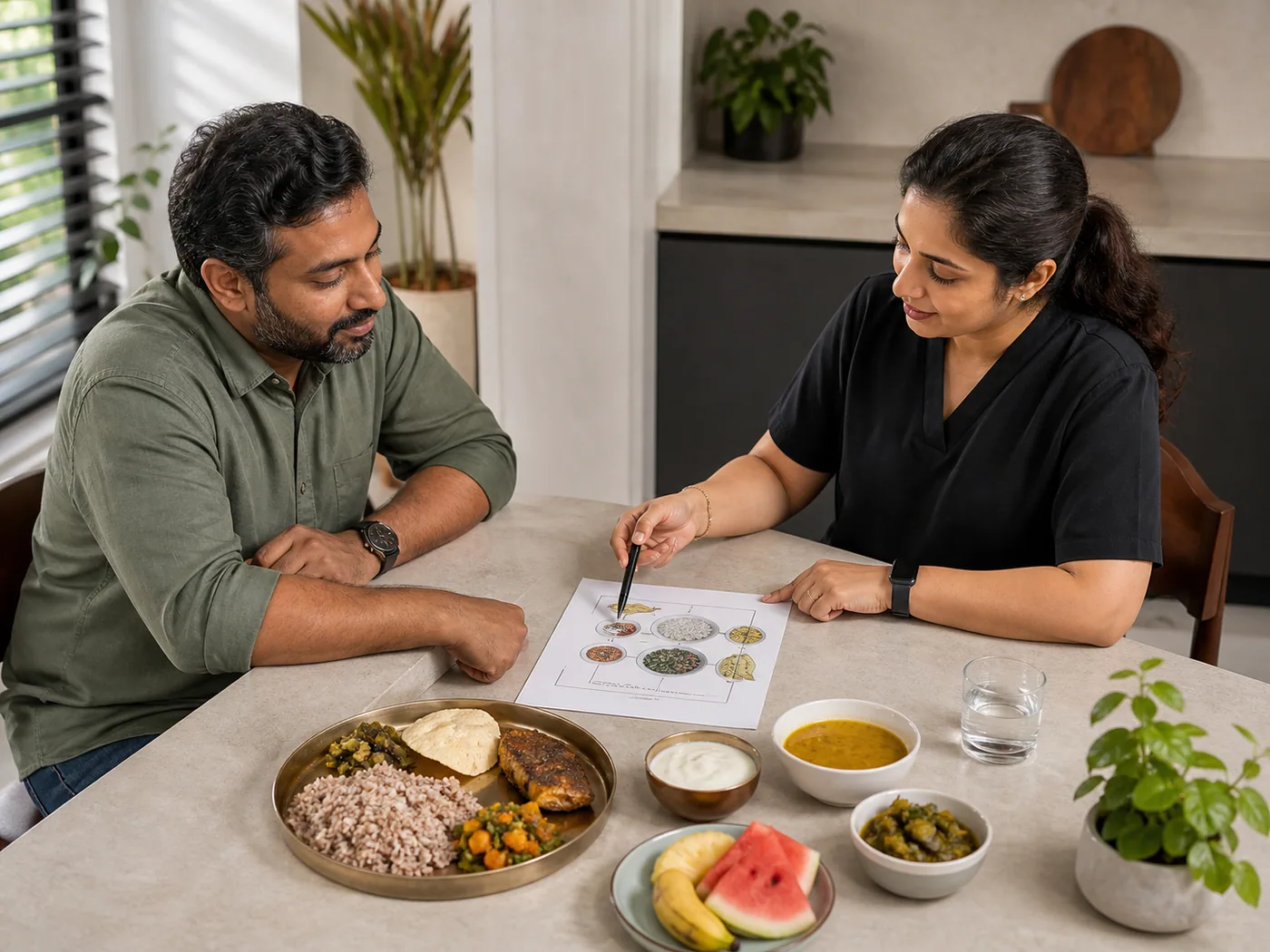
Nutrition without a separate life
A useful plan can include rice, fish, pulses, vegetables, curd and family meals. The work is deciding portions, protein, fibre, timing and frequency based on your health and routine.
Movement and muscle
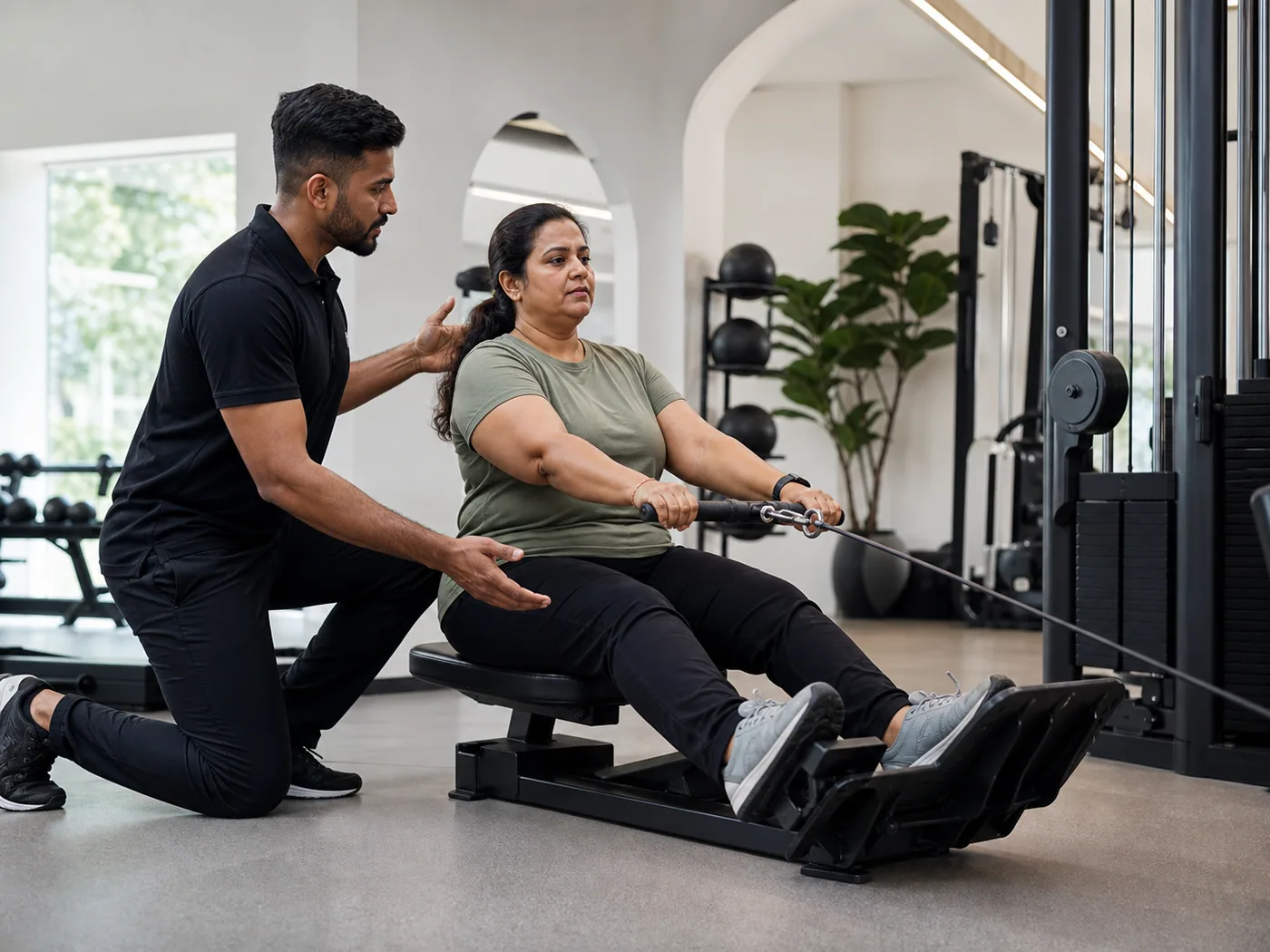
Weight reduction can include loss of muscle. Strength, mobility and adequate protein help protect function while the programme works on body fat and metabolic risk.
See how Pilates can fitPain, stamina and confidence set the first step.
Progress is adjusted instead of forced.
Pilates, personal training or EMS is selected only when useful.
Behaviour, sleep and follow-through
Hunger, stress, travel, poor sleep and missed sessions are information. Follow-up uses that information to make the next step smaller and more repeatable.
Keep three anchors: one reliable breakfast, a protein-led main meal and a short walk. Resume the fuller plan when the week settles.

How progress is reviewed
Not every marker is needed for every person. Your clinician selects what is relevant and explains what a change does, and does not, mean.
Used over time, not judged from a single day.
Muscle and body fat estimates where the measurement is useful.
Glucose, lipids, blood pressure or liver markers when clinically relevant.
What the body can do, not only what it weighs.
Patterns that affect hunger, energy and adherence.
What was realistic enough to repeat and what needs adjustment.
Individual results vary. The programme does not promise a specific amount or speed of weight loss.
Medical weight management
GLP-1 medicines may be considered for eligible adults after a qualified clinician reviews medical history, current medicines, contraindications, laboratory results and treatment goals. They are not automatically suitable for everyone.
Current clinical guidance treats weight-management medicine as part of comprehensive care, alongside dietary, activity and behavioural support. Read the WHO overview and NICE guidance.
Request a medical assessmentDetailed weight care guides
Each guide explains the purpose, process, limits and next step for one part of the programme. It is information for a better consultation, not a diagnosis.
Assessment, GLP-1 eligibility, safety and follow-up.
Nutrition, hydration and muscle support after prescription.
Strength and mobility matched to health and capacity.
Routines, emotional eating, recovery and follow-through.
Connected care
You do not need to choose the whole programme before the first conversation. The team can redirect the booking after reviewing your concern.
For diabetes, PCOS, fatty liver, appetite, weight and practical meal planning.
→Low-impact strength supportSupervised muscle activation and movement support for suitable adults.
→Glucose and diabetesA dedicated pathway when glucose control is the central clinical concern.
→Not sure where to beginStart with one conversation and let the care team identify the next useful step.
→Common questions
It is for adults living with overweight or obesity who want a medically guided plan rather than a generic diet or exercise challenge. A clinician still needs to assess whether the programme and each component are appropriate.
No. Nutrition is one part of the programme. The assessment also considers metabolic health, movement, sleep, behaviour, medicines and related conditions.
Not automatically. Prescription treatment is considered only after clinical eligibility and safety review. Many people begin with nutrition, movement and behaviour support without medication.
You can request an assessment. Bring the medicine name, dose, prescriber details, recent reports and any side effects. Lyxaa does not replace the prescribing clinician or advise self-adjustment.
No. Bring recent reports if you have them. The clinician decides whether additional testing would change care after understanding the main concern.
Some reviews and nutrition follow-ups may be available online. Body composition, physical assessment, training and sample collection may require an in-person visit.
Essential starts at ₹5,499 for 30 days, Pro at ₹7,499 and Premium at ₹13,999. Each also has 60-day and 90-day options. The Precision Plan with CGM starts at ₹12,199; the Weight Optimisation Programme starts at ₹29,999 per month. Compare all plans and inclusions.
No. Results vary with health status, treatment suitability, adherence and time. The programme tracks clinically relevant change but does not promise a fixed number or deadline.
Weight management | Kozhikode
Tell us what you have tried, what is getting in the way and what your health is already showing.