Movement and readiness check
Review activity level, pain, balance, confidence, recent symptoms and medical considerations before choosing exercises.
- Clarify what needs medical or physiotherapy input
- Identify movements that are currently comfortable
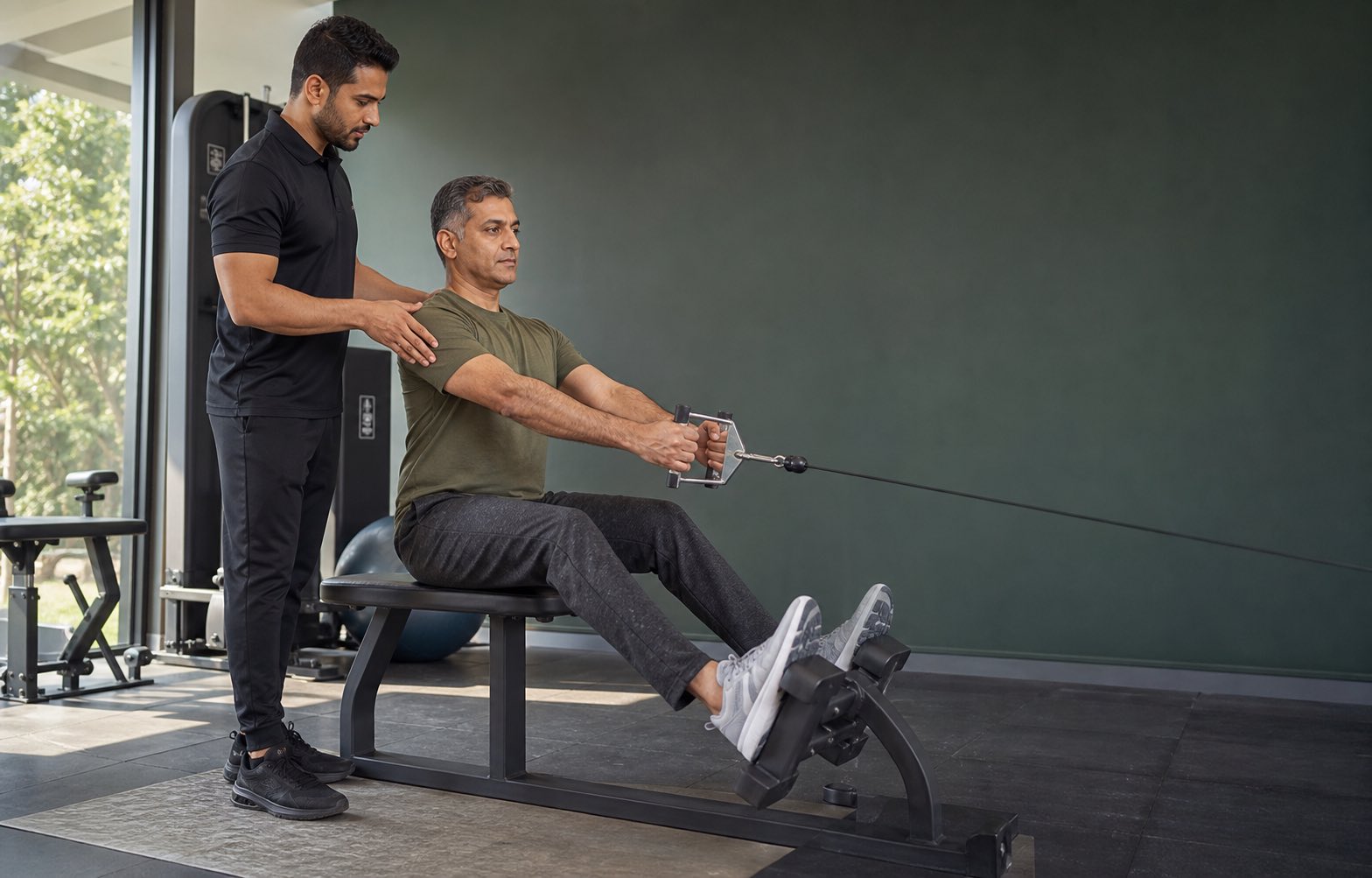
Supervised training in Kozhikode
Personal training within weight management starts from pain, stamina, confidence and medical context. The aim is better strength, mobility and repeatable movement, not the hardest possible session.
Training inside weight care
A useful movement plan supports health and daily function while weight care is underway. It should be realistic enough to repeat and adjustable when pain, fatigue or recovery changes.
Programme information by Lyxaa · Updated 2 September 2026Weight management personal training is supervised strength, mobility and activity planning adapted to a person's current capacity and health context. It is not a standard gym challenge or a promise of a fixed weight outcome.
Strength protects function. Weight change can occur alongside muscle loss, so resistance work and adequate nutrition deserve attention.
Joint comfort shapes the starting point. Knee, back, hip or foot pain can change exercise selection, range, pace and the need for further assessment.
Consistency is a design problem. Shorter sessions, walking, mobility and recovery may be more useful than an intense plan that cannot be repeated.
How training progresses
Progression follows movement quality and recovery, not a fixed calendar copied from another person.
Review activity level, pain, balance, confidence, recent symptoms and medical considerations before choosing exercises.
Begin with manageable walking, mobility and strength patterns. Technique and comfort come before load or volume.
Resistance, duration or complexity changes gradually as movement, confidence and recovery improve.
Progress includes stairs, walking tolerance, balance, mobility and confidence, not only gym numbers or calories.
What the trainer watches
Every session gives information. Technique, symptoms and recovery determine the next step.
Progress without force
A better session leaves a clear next step, not a body that cannot move tomorrow.The programme can combine supervised sessions with simple activity between visits.
Control, range, posture and breathing before heavier resistance.
Pain, dizziness, fatigue and next day response inform progression.
Walking, stairs, carrying, balance and confidence show whether training is transferring.
Safety and fit
Tell the team about medical conditions, recent procedures, pregnancy, pain, neuropathy, dizziness and unusual glucose or blood pressure readings before training.
Injury diagnosis and rehabilitation may require assessment by a qualified physiotherapist or doctor.
Electrical muscle stimulation has its own screening requirements and is not suitable for everyone.
Strength work should be supported by a nutrition plan that considers protein, energy, health conditions and appetite.
Common questions
No. The movement assessment establishes the starting point. Exercise is adapted to current stamina, confidence, mobility and relevant medical considerations.
No. The plan focuses on strength, mobility, function and repeatable activity. Intensity is only useful when it is appropriate and recoverable.
Request an assessment and describe the pain clearly. The team will decide whether adapted training is appropriate or whether medical or physiotherapy review should come first.
No. EMS is a separate supervised option with its own suitability screening.
Yes. Within the Weight Optimisation Programme, movement and nutrition can be reviewed together so appetite, protein, energy and recovery are not treated separately.
Personal training · Kozhikode
Share your current activity, pain, confidence and goals so the first session begins at the right level.
Programme options
Explore Essential, Pro and Premium support, plus CGM and broader Weight Optimisation options. The team will confirm which programme fits your needs.
View plans and pricing