Regular Pilates
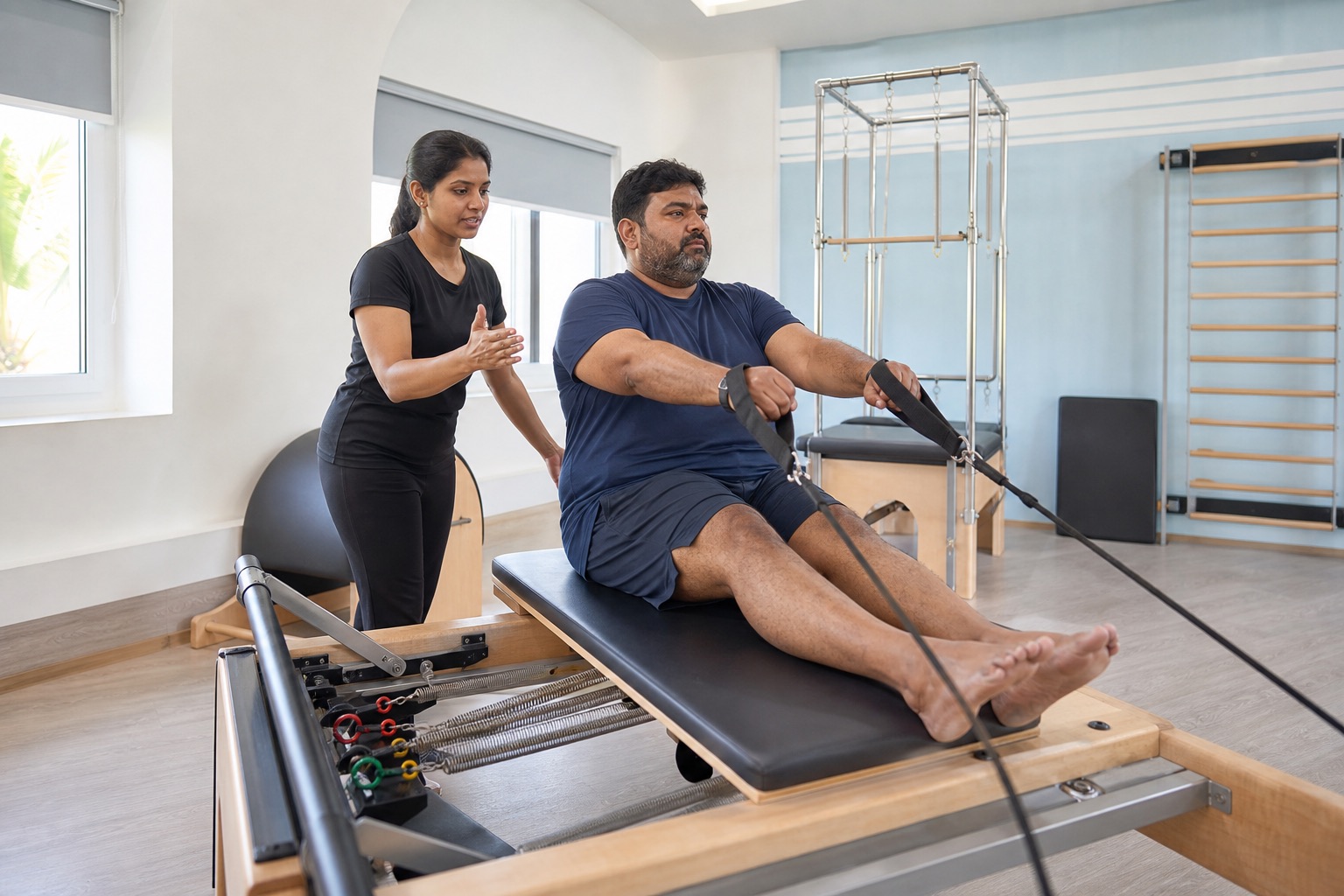
Private equipment-based movement for control, mobility, strength and confidence.
Home/Pilates/Regular Pilates/Weight management
Movement within a wider plan
Pilates can support strength, movement confidence and a regular activity habit. It should not be sold as a guaranteed weight-loss method or a replacement for nutrition, overall activity, sleep, behaviour support and medical care when needed.
Weight management is influenced by food intake, physical activity, sleep, medicines, health conditions, stress, environment and behaviour. One exercise format cannot address all of these factors.
Pilates may be useful when a private, lower-impact and highly adjustable session makes it easier to begin or maintain structured movement. It can challenge muscles and coordination, but it is not automatically superior to walking, resistance training or other exercise.
One review in adults with overweight or obesity reported reductions in body weight, body mass index and body fat, but the included studies were small and the authors called for larger, better trials. A separate review of mat Pilates found no clear advantage over control or other exercise for body composition. These mixed findings do not justify promising a particular change on the scale.
A movement option can still be useful when it supports strength, mobility, confidence and a routine someone can continue. NICE advises encouraging physical activity for its health benefits even when it does not produce weight loss.
Choosing the movement route
Lyxaa’s Weight Optimisation Programme connects nutrition and medical context with an appropriate movement route. Selection follows goals, symptoms, preferences and capacity.
Private equipment-based movement for control, mobility, strength and confidence.
Progressive strength and conditioning when a broader gym-based plan is suitable.
An optional screened adjunct for suitable adults, with close qualified supervision.
Walking, sitting less and repeatable daily movement remain part of the overall plan.
Pilates, strength training or EMS
You prefer private equipment-based coaching, want to improve movement control, or need an adjustable route into regular exercise.
Your plan needs progressive strength, conditioning and broader exercise variety matched to current health and capacity.
You have been screened and a qualified professional can supervise continuously. Evidence is more consistent for strength and muscle outcomes than for fat loss.
A shortcut, a substitute for the rest of care, or proof that a particular weight outcome will occur.
How it connects
Health history, medicines, symptoms and weight trajectory help identify risks and priorities.
Food decisions are built around health, appetite, routine, culture and what can be followed.
Pilates, personal training, EMS or another practical route may be selected where appropriate.
Progress is judged across health, strength, function, habits and clinical markers, not weight alone.
Choose your next page
Weight Optimisation · Kozhikode
Begin with the Weight Optimisation assessment if you need help choosing the right movement route.