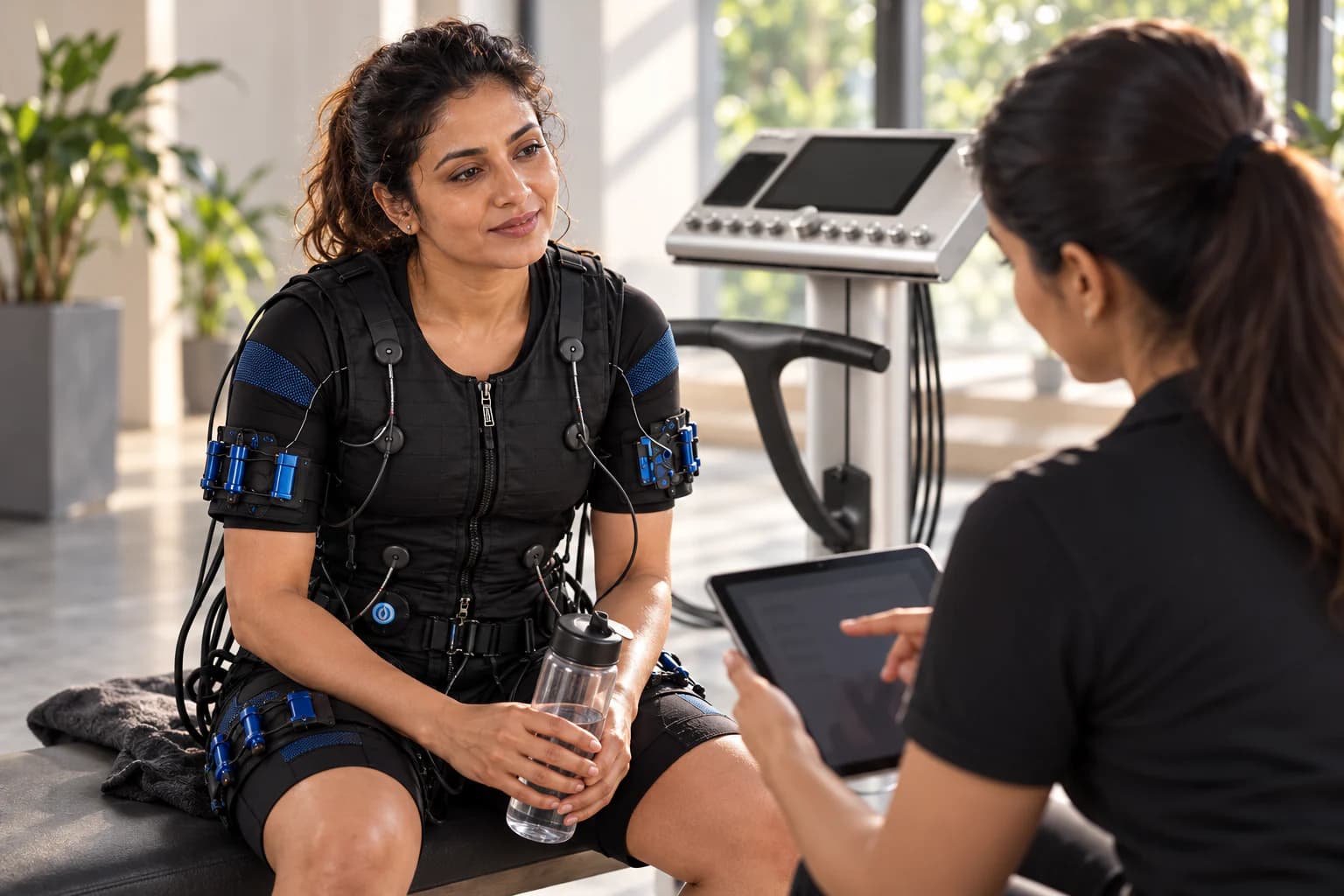
Frequency follows your response
A short active session can still create a substantial muscular stimulus. The useful question is therefore not how many appointments fit into a week, but how much training can be repeated with good movement and adequate recovery.
Lyxaa reviews the previous visit before progressing the next one. Training history, current activity, sleep, travel, work demands and the goal all affect that decision.
Begin with a conditioning period
International guidance recommends a gradual eight-to-ten-week familiarisation and conditioning period. During that period, the recommendation is no more than one 20-minute WB-EMS session each week, with reduced intensity, duration and exercise frequency at the beginning.
This gives a new participant time to learn the sensation, build movement confidence and show how they recover before the service becomes more demanding.
Recovery is part of the plan
The trainer asks about muscle soreness, unusual weakness, fatigue, sleep and any symptoms after the session. That response can support progression, a similar exposure, a lighter appointment or extra recovery time.
Arrive hydrated, eat normally and tell the team about illness, a new medicine, a recent procedure or a material change in health before the next visit.
Place EMS inside the whole week
Walking, aerobic exercise, sport, conventional strength work, Pilates and recovery all create different demands. Lyxaa places EMS where it can contribute focused strength work without crowding the rest of the plan.
The schedule should serve the outcome. A busy professional may value one protected appointment, while an athlete needs the session coordinated with practices, lifting and competition.
- Share all structured training with your EMS trainer
- Leave enough time to assess recovery before another intense session
- Review the schedule after travel, illness or a major training change
- Progress from response rather than calendar pressure
SOURCES
Evidence used for this guide
Sources checked 10 October 2026. These references explain the topic; the first visit determines individual suitability.
International position statement for safe and effective WB-EMSUpdated international consensus on contraindications