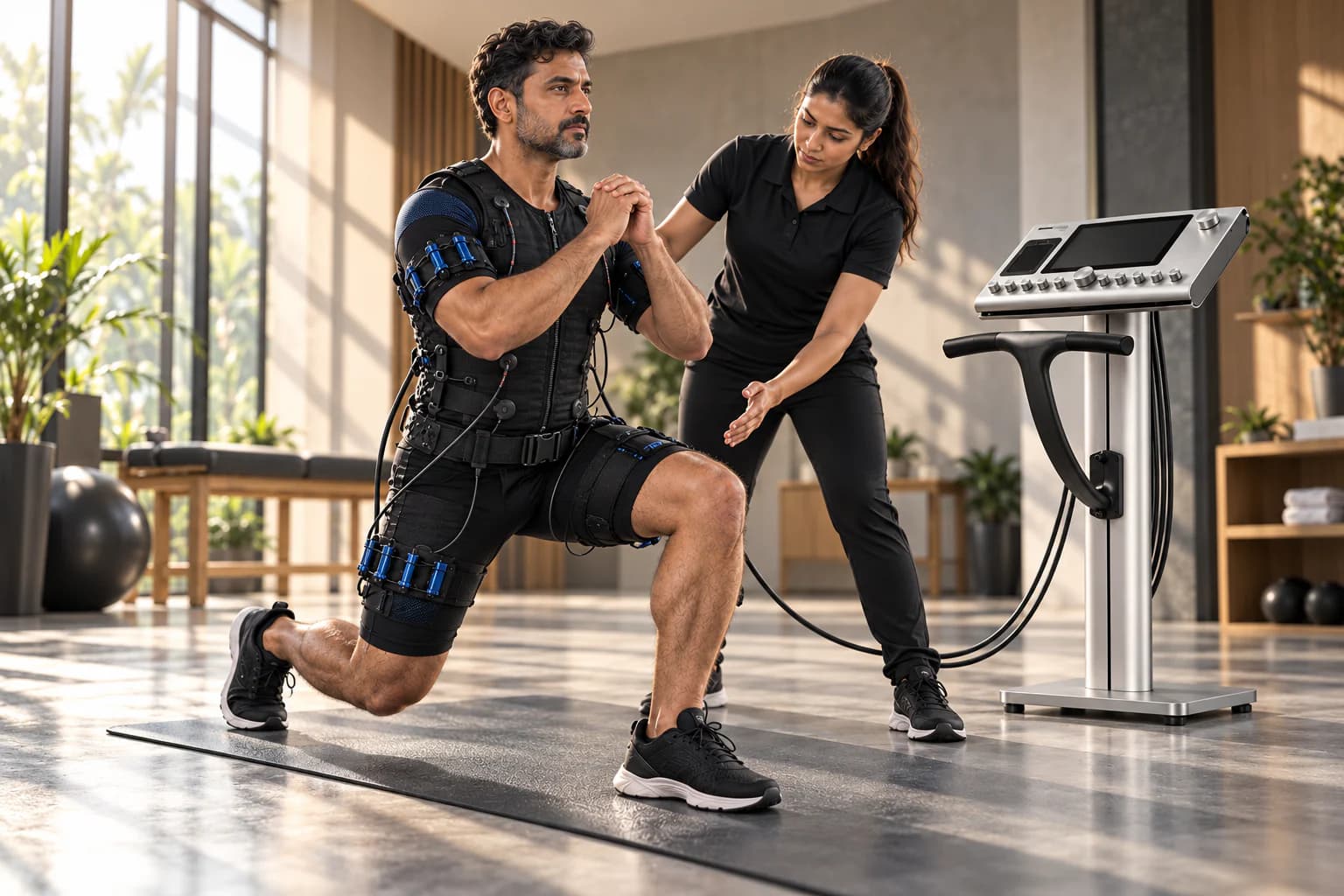
Name the adaptation you want
Strength, muscle size and muscular endurance are related, but they are not identical. The first conversation defines which outcome matters and where it should show up in daily life, sport or another repeatable task.
A specific outcome gives the trainer a basis for choosing movements and reviewing progress. It also prevents the session from becoming a pursuit of intensity without a useful result.
Progress the complete session
The trainer adjusts exercise choice, movement quality, pace and stimulation together. Progress can come from better control, a stronger repeatable movement, more work at the same quality or an appropriate change in the electrical stimulus.
The sensation alone does not measure progress. Attendance, performance and recovery over several weeks provide a more useful view.
Give muscle the support it needs
Muscle development depends on repeated training, enough dietary protein and energy, sleep and recovery. Lyxaa can connect EMS with nutrition or a broader health plan when those inputs need attention.
Walking, aerobic activity and conventional resistance exercises may still belong in the week. EMS supplies one supervised strength exposure; it does not need to carry every training goal.
Measure a result you can use
A review may use repeatable movement performance, functional tasks, relevant body-composition measures or training consistency, depending on the original goal.
The trainer then keeps the session, changes the plan or recommends another Lyxaa service from what the measures and the person's experience show.
- Agree one primary outcome before starting
- Review movement quality as well as effort
- Track recovery between appointments
- Reassess whether EMS is contributing to the wider goal
SOURCES
Evidence used for this guide
Sources checked 10 October 2026. These references explain the topic; the first visit determines individual suitability.
Systematic review and meta-analysis in non-athletic adultsReview of body composition, strength and power outcomes