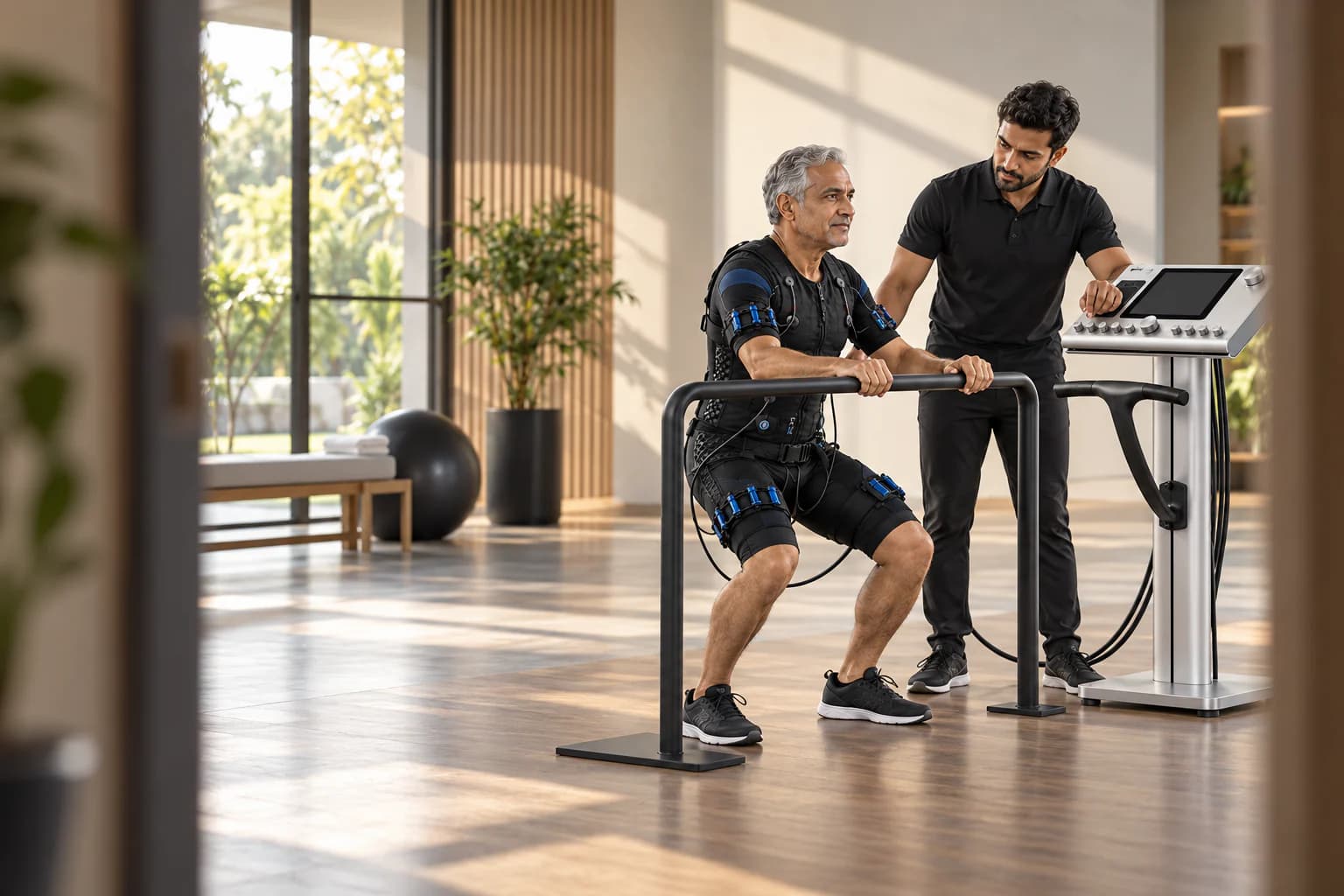
Why muscle strength matters with age
Ageing, illness and periods of inactivity can reduce muscle strength and reserve. Maintaining muscular capacity supports everyday tasks, balance, confidence and independence.
Sarcopenia is a clinical condition involving low muscle strength and other measures. Proper assessment clarifies the need; a supervised training service can then become one part of the response.
What the research supports
The most consistent finding is improved muscle strength. Earlier WB-EMS reviews reported benefits across several strength, muscle and function outcomes; a newer guideline review found improved strength while pooled changes in muscle mass and physical function were less clear.
That evidence supports considering WB-EMS as one supervised strength option for selected older adults. Lyxaa then uses the person's health, capability and response to shape the actual programme.
Build the complete healthy-ageing plan
Walking and aerobic activity, balance practice, adequate nutrition and protein, sleep, social connection and clinical care all support healthy ageing in distinct ways.
Where suitable, EMS can add focused, coached strength work to those foundations. The aim is useful capacity in daily life, progressed at a pace the person can recover from.
Screening deserves extra care
Medicines, implanted devices, heart or kidney conditions, recent surgery, neurological conditions, falls and current symptoms should be discussed before training. The trainer may recommend medical review before proceeding.
Beginners should start conservatively and have enough recovery between sessions. Pain, dizziness, marked weakness or unusual symptoms should be reported immediately.
SOURCES
Evidence used for this guide
Sources checked 10 October 2026. These references explain the topic; the first visit determines individual suitability.
Systematic review and meta-analysis in older adults2026 guideline review of EMS for sarcopenia and frailtyInternational WB-EMS safety recommendations