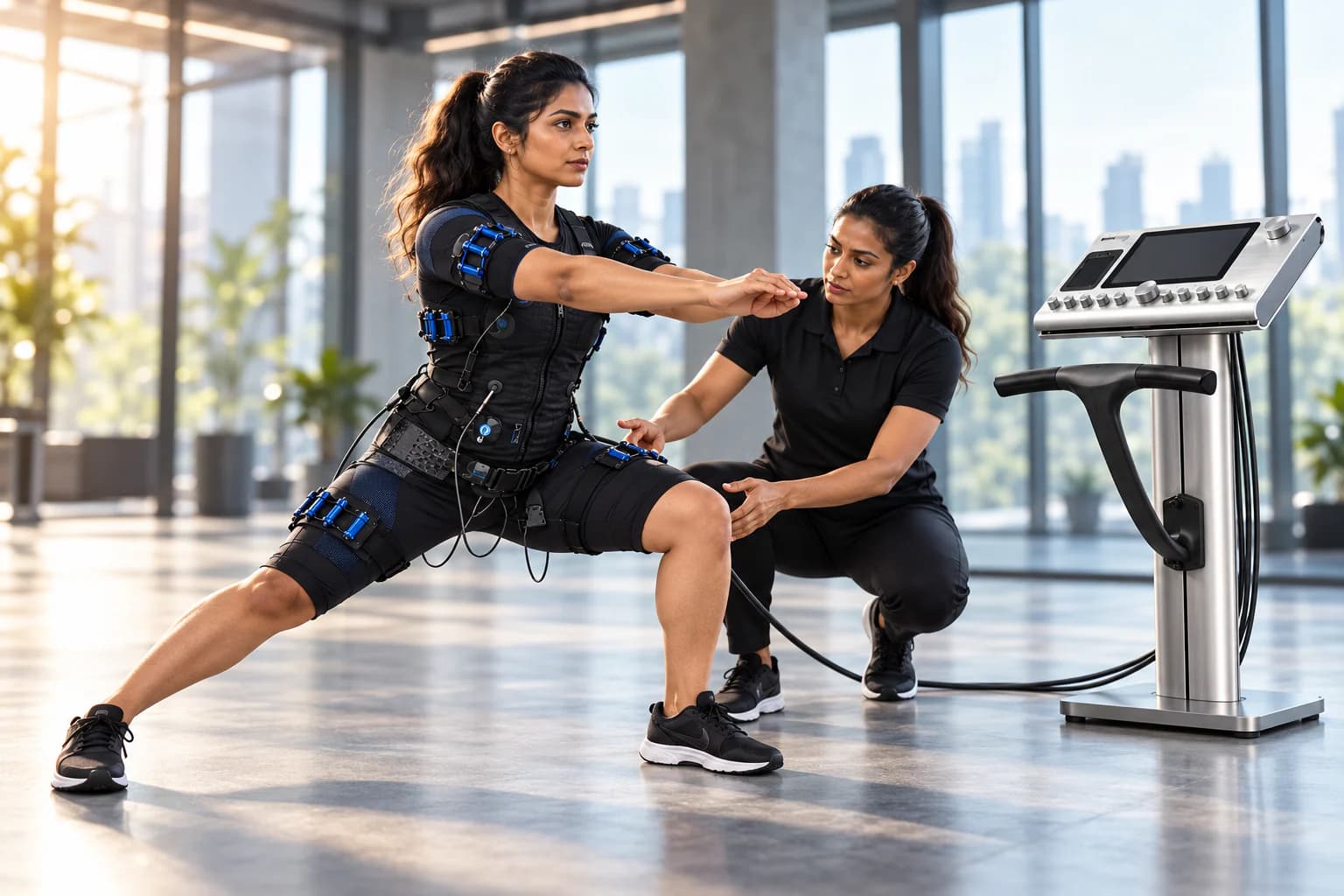
Start with the adaptation you need
An athlete should first identify the actual goal: maximal strength, repeated power, sprinting, change of direction, muscle endurance, return to training or simply a consistent supervised session.
The EMS session can then target muscular stimulus while sport practice, technical lifting, impact exposure and aerobic conditioning continue to develop their specific adaptations.
What athlete research shows
Systematic reviews map potential benefits across strength and performance outcomes, with programmes varying by sport, settings and training duration.
Lyxaa uses that evidence to define a specific role for EMS in the week and track the response that matters to the person, rather than applying one universal athlete protocol.
Manage total training load
The active session is short, but the stimulus can be demanding. Placing it beside heavy lifting, speed work or competition without enough recovery can add load at the wrong time.
Share the current training schedule, upcoming events, soreness and injuries with the trainer. Settings and movements should reflect that context.
Use supervision well
One-to-one coaching lets the trainer watch movement and adjust channels continuously. Experienced athletes begin progressively because the electrical stimulus can be novel even when the exercises are familiar.
Track useful outcomes over several weeks and keep the service aligned with the wider performance programme.
SOURCES
Evidence used for this guide
Sources checked 10 October 2026. These references explain the topic; the first visit determines individual suitability.
Evidence map of WB-EMS in athletesSystematic review and meta-analysis in trained adults